








INTEROPERABILITAS SISTEM SYARIAH DALAM PELAYANAN RUMAH SAKIT: PENDEKATAN MANAJERIAL UNTUK PENINGKATAN KUALITAS LAYANAN DAN EFISIENSI OPERASIONAL
Abstract
JKN demands cost-efficiency while syariah hospitals must uphold Islamic values consistently. Interoperable syariah systems in INA-CBGs-based JKN hospitals are examined for their influence on managerial practice, service quality, and operational efficiency. This research using a mixed-method, multi-case study in private Type B and C syariah hospitals. Syariah interoperability is operationalized as the alignment of syariah values and policies, governance, and hospital information systems with clinical and administrative processes, measured through Likert-scale surveys and qualitative analysis of open-ended responses and documents. Syariah values, policy frameworks, integration of MUKISI/DSN-MUI standards, managerial practices, service quality, and efficiency are all rated high, and efficiency initiatives are not perceived to erode syariah compliance. Nonetheless, JKN’s prospective payment generates tensions between cost containment and justice for the poor in high-cost cases, so strong syariah interoperability and data-driven management improve Islamic service quality and efficiency but cannot fully resolve conflicts with maqashid al-syariah.
Keywords: Sariah hospital interoperability, Hospital management, JKN national health insurance, Service quality, Operational efficiencyFull Text:
PDFReferences
Alfarizi, M. F., & Arifian, R. (2023). Islamic values integration in organizational management: A systematic review. Journal of Islamic Management Studies, 12(2), 89–106. https://doi.org/10.15408/jimsv12i2.12345
Ashidiqi, A. I., Shariff, S., & Kusbaryanto, K. (2025). Harmonizing Faith and Care: Analyzing Inpatient Satisfaction in Islamic Healthcare at Unimus Hospital, Indonesia. JMMR (Jurnal Medicoeticolegal Dan Manajemen Rumah Sakit), 14(1), 79–97. https://doi.org/10.18196/jmmr.v14i1.549
Astiwara, E. M. (2024). Integration of Sharia Principles in Islamic Hospital Management: Opportunities and Obstacles. International Journal of Science and Society, 6(4), 484–500. https://doi.org/10.54783/ijsoc.v6i4.1413
Aulia, M., Srimayarti, B. N., Aini, R., Yudhanto, S. B., & Hariani, M. (2025). Analysis of Sharia Hospital Services: Systematic Literature Review. JMMR (Jurnal Medicoeticolegal Dan Manajemen Rumah Sakit), 14(1), 119–133. https://doi.org/10.18196/jmmr.v14i1.526
Awang Abu Bakar, M. H., Ismail, S., & Ahmad, N. (2025). Shariah governance framework for Islamic healthcare institutions: Perspectives from Malaysia. Journal of Islamic Finance and Economics, 8(1), 45–62.
Carlos Antonio Marino, M. (2025). Enhancing Interoperability for a Sustainable, Patient-Centric Health Ecosystem: Insights from the JMIR Perspective. Journal of Medical Internet Research, 27(1), e69465. https://doi.org/10.2196/69465
Che Jamaludin, F. I., Abdullah, M. R. T. L., Endut, M. N. A. A., Saifuddeen, S. M., Hamimi, K. A., & Harun, S. (2025). Developing a Shariah-compliant medical services framework in Malaysia: an expert system approach using fuzzy Delphi method and interpretive structural modelling. BMJ Open, 15(1). https://doi.org/10.1136/bmjopen-2023-082263
Costa, T., Borges-Tiago, T., Martins, F., & Tiago, F. (2024). System interoperability and data linkage in the era of health information management: A bibliometric analysis. Health Information Management Journal. https://doi.org/10.1177/18333583241277952
DSN-MUI. (2016). Pedoman Penyelanggaraan Rumah Sakit Berdasarkan Prinsip Syariah. Jakarta: Dewan Syariah Nasional - Majelis Ulama Indonesia.
Dunda, N. M., Prasetyo, E., Rinaldi, E. A., & Budiman, D. (2025). Analyzing Ethical Practices of Digital Marketing in YARSI Islamic Hospital. International Journal of Digital Healthcare, 5(6), 295–301.
Ermiati. (2025). Transformation of Sharia Supervision in the Digital Islamic Financial Ecosystem: Challenges and National Policy Directions. International Journal on Advanced Science, Education, and Religion, 8(3), 208–215. https://ojs.staialfurqan.ac.id/IJoASER
Gobezie, D. A., Gebeyehu, E. M., & Yasine, T. (2025). Healthcare governance practices and their determinants among public hospital managers in South Wollo zone, Northeast Ethiopia. BMC Health Services Research, 25(1), 1–11.
Hayati, R., Aini, Q., & Abdulamir, M. (2025). Shariah Hospitals in Indonesia: Bridging Islamic Values and Healthcare Management. Journal of Islamic Healthcare Management, 14(December), 295–309.
Maksum, M., Wahyuni, A., Farida, A. R., Hasanah, L., & Fuad, S. (2022). Sharia Service as An Added Value: Response to Sharia Standard in Hospital Service. Samarah, 6(1), 423–448. https://doi.org/10.22373/sjhk.v6i1.13418
Muchtiar, M., Narimawati, U., & Kurniawan, B. (2026). The role of hospital management in productivity, revenue, efficiency, and effectiveness of JKN patient services: A case study of a private hospital (XYZ) in Indonesia. MR Scholar, 2(1), 39–49. https://doi.org/10.71312/mrscholar.v2i1.811
MUKISI. (2017). Standar & Instrumen Sertifikasi Rumah Sakit Syariah Versi 1438. Jakarta: Majelis Upaya Kesehatan Islam Seluruh Indonesia.
Mustafa, N. K., Ibrahim, R., Aljunid, S. M., Aizuddin, A. N., & Awang, Z. (2025). Critical Success Factors Influencing the Acceptance of a Casemix-Based Hospital Information System: Cross-Sectional Study. Journal of Medical Internet Research, 27(1). https://doi.org/10.2196/74226
Ndlovu, K., Mars, M., & Scott, R. E. (2021). Interoperability frameworks linking mHealth applications to electronic record systems. BMC Health Services Research, 21(1), 1–10. https://doi.org/10.1186/s12913-021-06473-6
Nur Hidayah. (2024). Integration of Islamic Values Into Balanced Scorecard As A Strategic Management System at A Sharia Hospital. JABM (Journal of Applied Business and Management), 10(2), 156–172.
Parasuraman, A., Zeithaml, V. A., & Berry, L. L. (1988). SERVQUAL: A multiple-item scale for measuring consumer perceptions of service quality. Journal of Retailing, 64(1), 12–40.
Permanasari, V. Y., Sulistiadi, W., Ayuningtyas, D., Jati, P., Gustina, I., & Widyasanti, N. (2025). Development of Sharia Hospitals As a Source of New Economic Growth. Journal of Islamic Monetary Economics and Finance, 11(3), 669–688. https://doi.org/10.21098/jimf.v11i3.2714
Puti Raudha, A., Ratnasari, R. T., & Gunawan, S. (2025). Service quality in hospital inpatient care: SERVQUAL model application in emerging markets. BMC Health Services Research, 25(1), 234.
Rahmatia, R., Sumarni, S., & Kusuma, A. (2024). Patient satisfaction and service quality in Islamic hospitals: A mixed-methods approach. Journal of Healthcare Management, 19(3), 145–162.
Saputra, W., Trisnantoro, L., & Kosen, S. (2020). Hospital efficiency under Indonesia's case-based payment system. Health Policy and Planning, 35(7), 815–823. https://doi.org/10.1093/heapol/czaa045
Suhaimey, S. S., Saidi, S., & Mohd Yusof, N. (2025). Integration of Islamic principles in healthcare delivery: a narrative review. IIUM Journal of Orofacial and Health Sciences, 6(2), 225–235. https://doi.org/10.31436/ijohs.v6i2.351
Warsidi, W., Abdurrahman, R. A. H., & Ismail, S. (2024). Implementation of Sharia System in Sharia-Certified Hospitals. Jurnal Ilmiah Ekonomi Islam, 10(3), 2828–2833. https://jurnal.stie-aas.ac.id/index.php/jei/article/view/14713
DOI: https://doi.org/10.71312/mrbest.v5i2.831
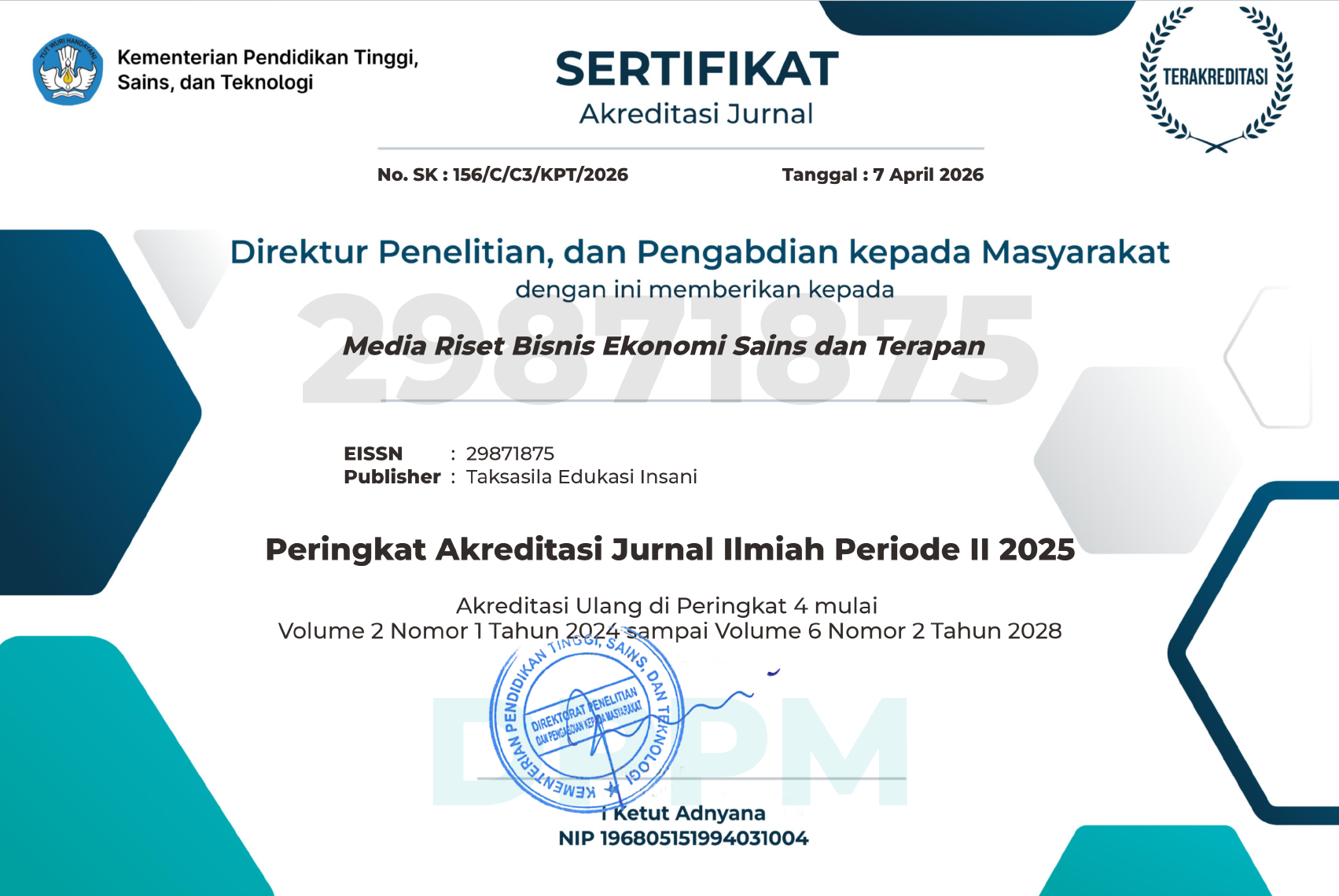
Media Riset Bisnis Ekonomi Sains dan Terapan (MRBEST) Indexed by:






Publisher: Taksasila Edukasi Insani
Contact: Tri Ananto
Publisher Address: Jl. Cireundeu Raya No.1A, RT.002/RW.06, Kelurahan Cireundeu, Kecamatan Ciputat Timur, Kota Tangerang Selatan, Banten 15419.
Copyright © 2023 Media Riset Bisnis Ekonomi Sains dan Terapan (e-ISSN: 2987-1875)



Media Riset Bisnis Ekonomi Sains dan Terapan © 2023 by Taksasila Edukasi Insani is licensed under Creative Commons Attribution-ShareAlike 4.0 International.