




PERBANDINGAN KINERJA INDUSTRI MAKANAN HALAL INDONESIA DENGAN NEGARA-NEGARA UTAMA EKONOMI ISLAM
Abstract
This study aims to compare the performance of Indonesia's halal food industry with that of major Islamic economic countries based on the State of the Global Islamic Economy (SGIE) Report 2024/25. Using literature review and secondary data analysis, this study positions Indonesia in the halal food sector, identifying the driving factors, and identifying obstacles to improving global competitiveness. The results show that Indonesia ranks third in the Global Islamic Economic Indicator (GIEI), but still lags behind Malaysia and Saudi Arabia in terms of exports, industrial innovation, and the strength of its halal ecosystem. This study provides strategic recommendations to strengthen Indonesia's competitiveness through strengthening halal certification, supply chain digitalization, and the development of halal industrial parks.
Keywords: Halal food, SGIE 2024/25, Indonesia, Malaysia, Saudi Arabia, halal industry.
Full Text:
PDFReferences
Brynjolfsson, E., & McAfee, A. (2014). The second machine age: Work, progress, and prosperity in a time of brilliant technologies. New York: W. W. Norton & Company.
Dewi, R. (2023). Efektivitas sertifikasi halal bagi UMKM di Indonesia pasca UU JPH. Jurnal Ekonomi Syariah Indonesia, 11(2), 145–160. https://doi.org/10.20885/jesi.vol11.iss2.art5
Hamzah, A. (2021). Membangun ekosistem halal berkelanjutan: Regulasi, digitalisasi, dan inovasi. Jurnal Ekonomi dan Bisnis Islam, 7(1), 33–47. https://doi.org/10.21580/jebi.2021.7.1.7890
Huda, N., & Heykal, M. (2019). Peta jalan industri halal di Indonesia: Upaya meningkatkan daya saing global. Humanis: Jurnal Humaniora, Sosial dan Bisnis, 3(4), 988–1005. https://doi.org/10.33005/hms.v3i4.397
Kasim, N. (2021). Global recognition of Malaysia’s halal certification: The role of JAKIM. Journal of Halal Studies, 5(2), 77–89. https://doi.org/10.22452/jhs.vol5no2.5
Komite Nasional Ekonomi dan Keuangan Syariah (KNEKS). (2024). Laporan perkembangan ekonomi syariah Indonesia 2024. Jakarta: KNEKS.
Lubis, N. M. F., & Abdullah, R. (2020). Halal economic: Challenges and emerging opportunities in Malaysia. Journal of Islamic Philanthropy and Social Finance, 1(1), 45–60. https://doi.org/10.24191/jipsf.v1i1.3881
Porter, M. E. (1990). The competitive advantage of nations. New York: Free Press.
Pratiwi, D. (2023). Kawasan industri halal sebagai katalisator ekspor produk halal Indonesia. Jurnal Ekonomi Syariah dan Bisnis, 9(1), 112–125. https://doi.org/10.24235/jesb.v9i1.4567
Ramadhan, A. (2022). Halal supply chain management: Tantangan dan peluang di Indonesia. Jurnal Logistik dan Rantai Pasok Halal, 4(2), 89–102. https://doi.org/10.21009/jlrph.v4i2.223
Sari, R., & Yuliani, T. (2021). Analisis daya saing industri halal Indonesia dalam perspektif global. Jurnal Ekonomi Islam, 12(3), 201–215. https://doi.org/10.20885/jei.vol12.iss3.art2
State of the Global Islamic Economy Report. (2024/2025). Thriving in uncertainty. Dubai: DinarStandard & Salaam Gateway.
Tieman, M. (2011). The application of halal in supply chain management: In-depth interviews. Journal of Islamic Marketing, 2(2), 186–195. https://doi.org/10.1108/17590831111139893
Wilson, J. A. J. (2014). The halal phenomenon: An extension or a new paradigm? Social Business, 4(3), 255–271. https://doi.org/10.1362/204440814X14103454934294
Wulandari, S. (2023). Digitalisasi industri halal di Indonesia: Blockchain dan IoT sebagai pendorong daya saing. Jurnal Teknologi dan Ekonomi Syariah, 5(2), 134–148. https://doi.org/10.21009/jtes.v5i2.567
DOI: https://doi.org/10.71312/mrbest.v4i2.748
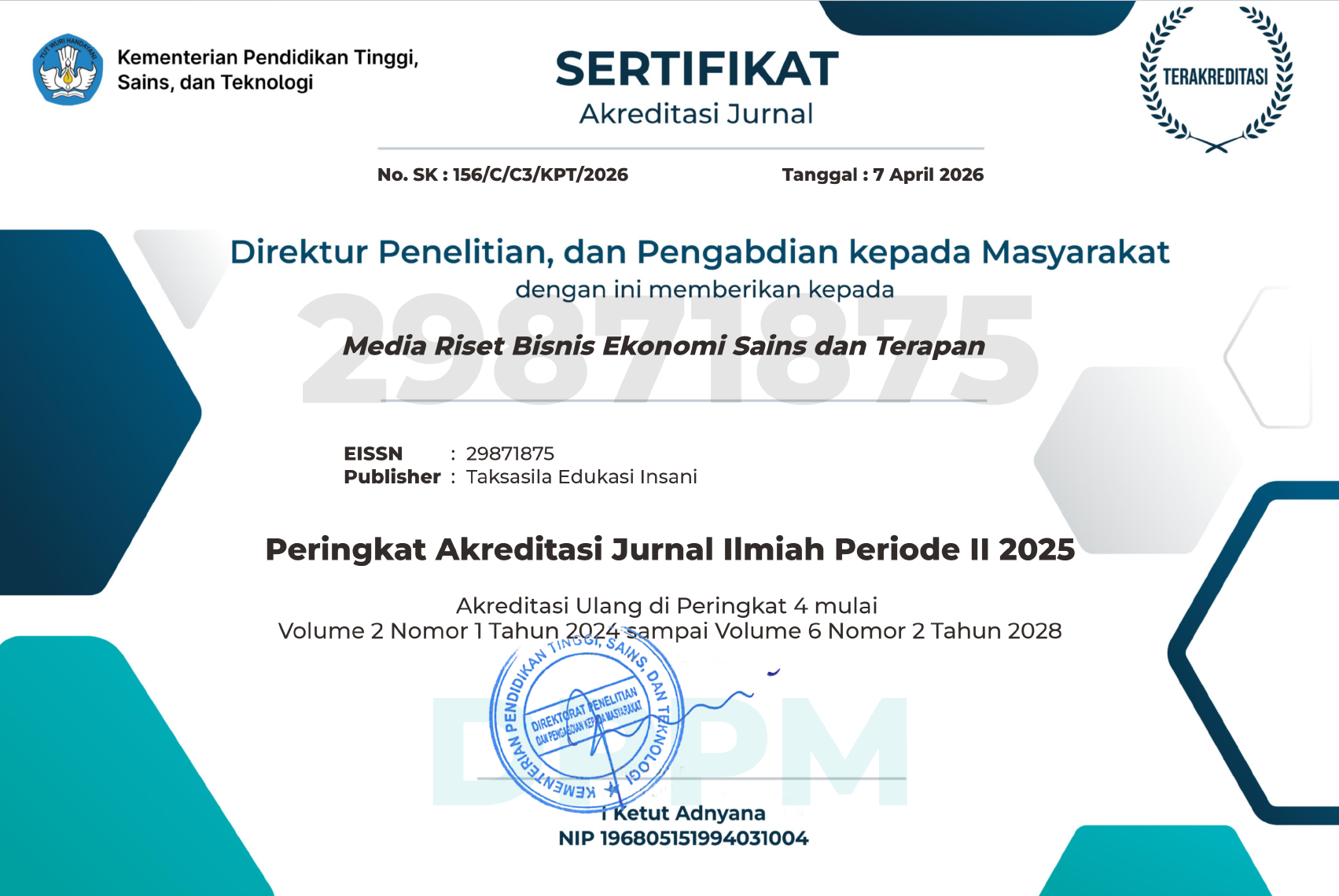
Media Riset Bisnis Ekonomi Sains dan Terapan (MRBEST) Indexed by:



Publisher: Taksasila Edukasi Insani
Contact: Tri Ananto
Publisher Address: Jl. Cireundeu Raya No.1A, RT.002/RW.06, Kelurahan Cireundeu, Kecamatan Ciputat Timur, Kota Tangerang Selatan, Banten 15419.
Copyright © 2023 Media Riset Bisnis Ekonomi Sains dan Terapan (e-ISSN: 2987-1875)

Media Riset Bisnis Ekonomi Sains dan Terapan © 2023 by Taksasila Edukasi Insani is licensed under Creative Commons Attribution-ShareAlike 4.0 International.